.png)





If you run a small business in the UK, waste collection is one of those essentials you cannot ignore. It affects cost, compliance, day-to-day operations and, in some industries, customer experience too.
At Waste & Washroom, we have supported thousands of UK businesses to reduce costs and simplify waste collection. Over time, the same problems keep showing up. Businesses pay more than they should, contracts roll over without review, and when service slips, people end up stuck chasing suppliers.
At the same time, many small businesses are still unsure what they legally need to do under the incoming Simpler Recycling legislation, what waste streams they actually require, and whether they are unknowingly overpaying for collections they do not really need.
This guide is here to help you understand how small business waste collection works in 2026, what your responsibilities are, what a sensible setup looks like, and where savings can usually be found.
What is business waste (commercial waste)?
Business waste, sometimes called commercial waste, is any waste produced as part of running a business. It applies to almost every organisation, not just large companies.
A common misconception is that business waste is collected like household waste, with councils providing a weekly collection service as part of business rates. In reality, councils do not collect commercial waste through business rates, and businesses are responsible for arranging collections through licensed providers.
This applies to a wide range of organisations, including sole traders, cafés, salons, offices, charities, home-based businesses, limited companies, schools, GP surgeries, dental practices, sports clubs and multi-site operators.
Under the Environmental Protection Act 1990, businesses have a duty of care to manage their waste responsibly. In practice, that means storing waste safely, using licensed waste carriers, and keeping the correct documentation in place, including Waste Transfer Notes.
Many small businesses also wrongly assume the new Simpler Recycling legislation does not apply to them because they are “too small”. In England, businesses with 10 or more full-time equivalent employees are already expected to comply, with businesses under that threshold due to follow from March 2027.
You can manage this directly with a provider, or work with a specialist partner who handles the whole process for you. That is the role Waste & Washroom plays. We manage collections and compliance on your behalf, and we use our buying power to secure better rates than most businesses can access alone.
Examples of business waste
Every small business produces waste, but the mix is different depending on what you do day to day. Some waste streams are obvious, others only become noticeable once problems start appearing.
A retail shop might deal with cardboard, plastic wrapping and general waste from staff and customers. It may also have less obvious waste streams such as animal by-products if food is being disposed of, sharps from broken blades used to open packaging, or hazardous waste from cleaning products used on floors and surfaces.
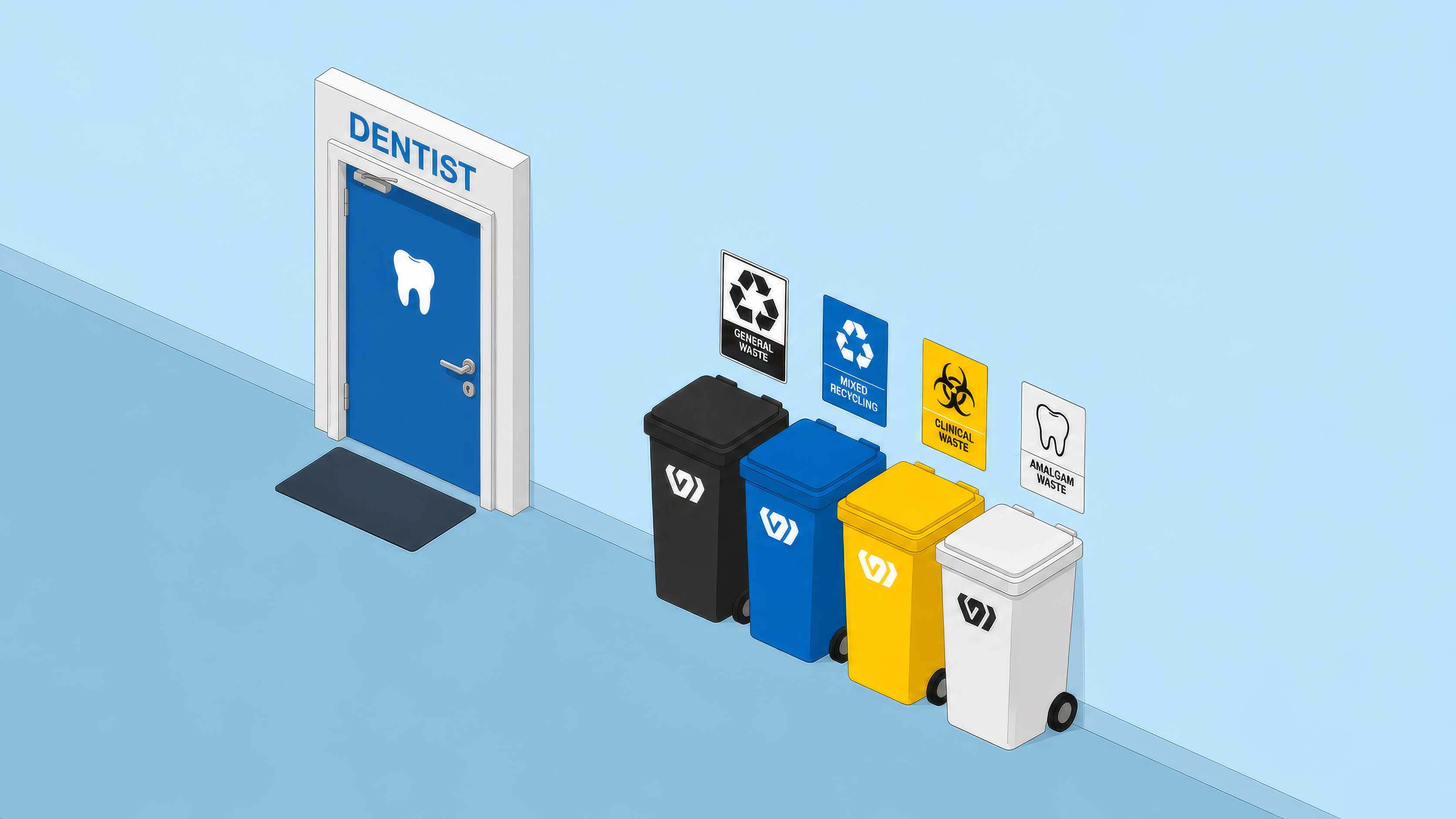
A dental practice’s waste collection will look completely different. General waste and recycling still apply, but you may also be dealing with clinical waste, sharps, amalgam waste and confidential waste of which need specialist collections.
Even office spaces can be more complicated than many businesses realise. A lot of businesses assume offices do not require food waste collections because they do not operate kitchens. In reality, a 50 or 60 person office with staff eating lunch daily can generate significant food waste through break rooms and shared kitchen areas.
The reason this matters is simple. When businesses put the wrong waste in the wrong stream, collections fail, costs rise, and compliance risk increases.
How do UK businesses dispose of waste correctly?
There is more to business waste disposal than placing a bin outside and believing it will be collected.
A compliant setup usually includes:
- Using licensed waste carriers
- Segregating waste into the correct streams
- Choosing bin sizes that match your volume
- Setting a realistic collection frequency
- Keeping documentation up to date, including Waste Transfer Notes
- Making sure waste is stored safely onsite
If that sounds like a lot, it can be. Most small businesses are not set up to manage waste compliance and supplier performance internally.
This is one of the biggest reasons businesses choose to speak to somebody experienced before setting up collections. Getting advice early can help avoid oversized bins, unnecessary collections, contamination issues and compliance problems later down the line.
There is also a lot of mixed messaging around commercial recycling. Many businesses assume commercial recycling works exactly the same as household recycling, but that is often not the case. For example, many commercial providers require glass to be separated from mixed recycling, even though households often combine them together.
This is one of the main reasons businesses work with Waste & Washroom. We manage the admin, keep documentation in place, and if something goes wrong, you have one point of contact who sorts it quickly. You are not stuck chasing suppliers across multiple departments or sitting on hold to call centres that do not understand your setup.
How Do I Set Up Commercial Waste Collection for a New Business?
If you are setting up a new business, one of the best things you can do is speak to somebody experienced from the early days..
Different businesses generate different waste streams, and what works for one site may not work for another. Somebody who understands the industry properly can help estimate realistic waste volumes, explain legal obligations, identify the correct waste streams and avoid unnecessary costs from the start.
A common issue is businesses either underestimating or overestimating what they need. Some businesses end up paying for oversized bins and excessive collection frequencies, while others fail to separate important waste streams properly and run into compliance issues later.
Food waste is one of the biggest examples. Many businesses assume they do not need a food waste collection because they do not run a kitchen. In practice, staff lunches, break rooms and customer waste can quickly create enough food waste to require a separate collection stream.
Staff education also matters far more than many businesses realise. Even the best waste setup can fail if staff are unclear what goes where. Simple posters, labelled bins and clear signage can dramatically reduce contamination issues and help businesses stay compliant.
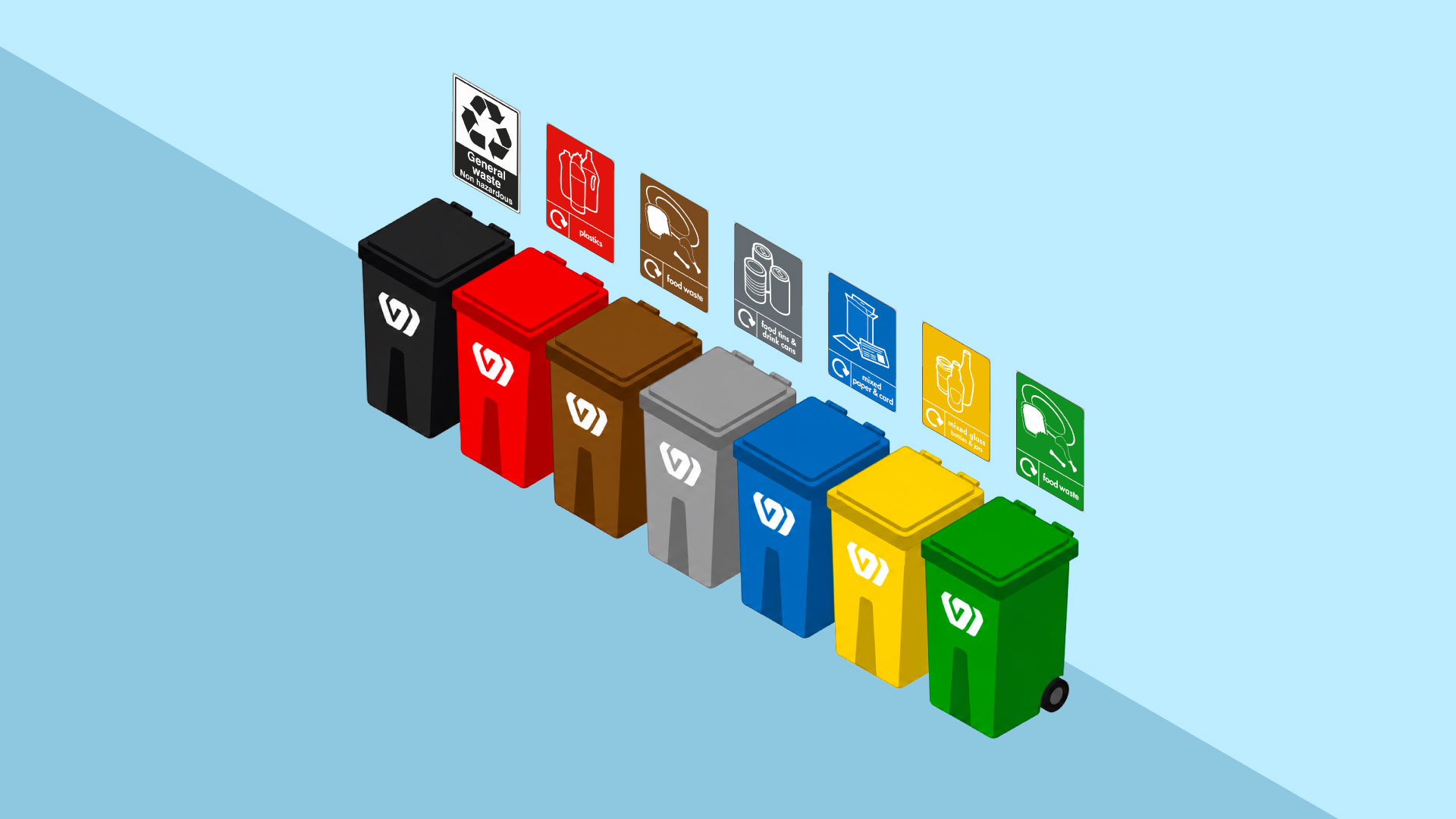
This is especially important with public-facing bins and temporary staff. Customers and new starters often assume commercial recycling works exactly the same way as household recycling, which can create contamination problems if bins are not clearly labelled.
Many businesses are already preparing for the next phase of Simpler Recycling by:
- Installing additional recycling and food waste bins
- Updating signage and posters
- Educating staff
- Reviewing their waste setup before legislation deadlines arrive
Preparing early is almost always easier than trying to make changes at the last minute.
The main types of business waste
Most UK small businesses deal with some combination of the following:
- General waste (non-recyclable everyday waste)
- Mixed recycling
- Food waste
- Glass recycling
- Confidential waste
- Sanitary waste
- Washroom waste
- Hazardous waste
The key point is that each stream needs the right container and the right service. Getting it right keeps costs down and keeps your business protected.
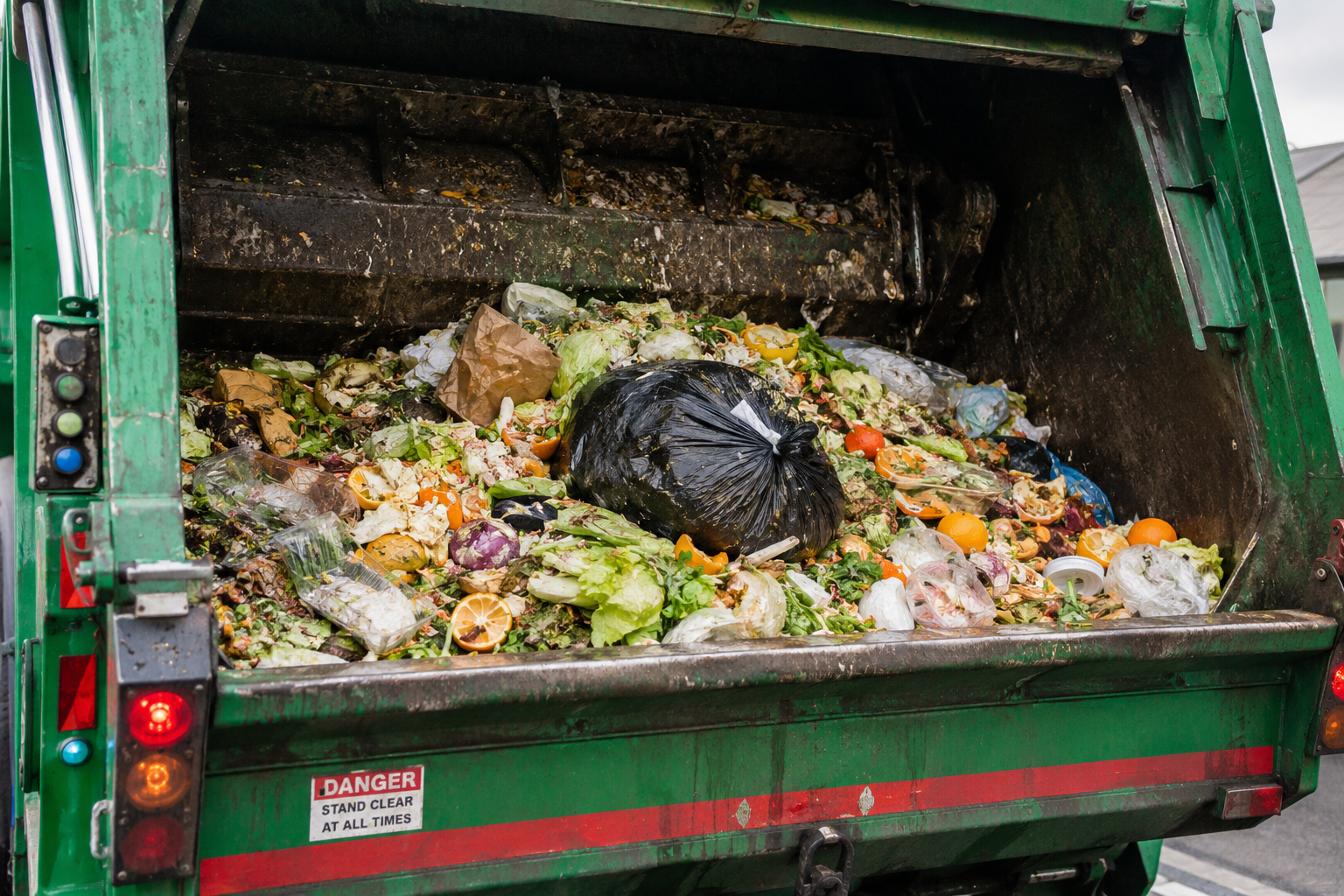
For many businesses, food waste is now one of the biggest opportunities for reducing costs and improving compliance. Food waste collections are on average around 50% cheaper per collection than general waste, largely because food waste is extremely heavy and expensive to dispose of through general waste streams.
Separating food waste properly can:
- Reduce general waste costs
- Reduce overweight charges
- Improve recycling rates
- Increase effective bin capacity
- Help businesses stay compliant with Simpler Recycling
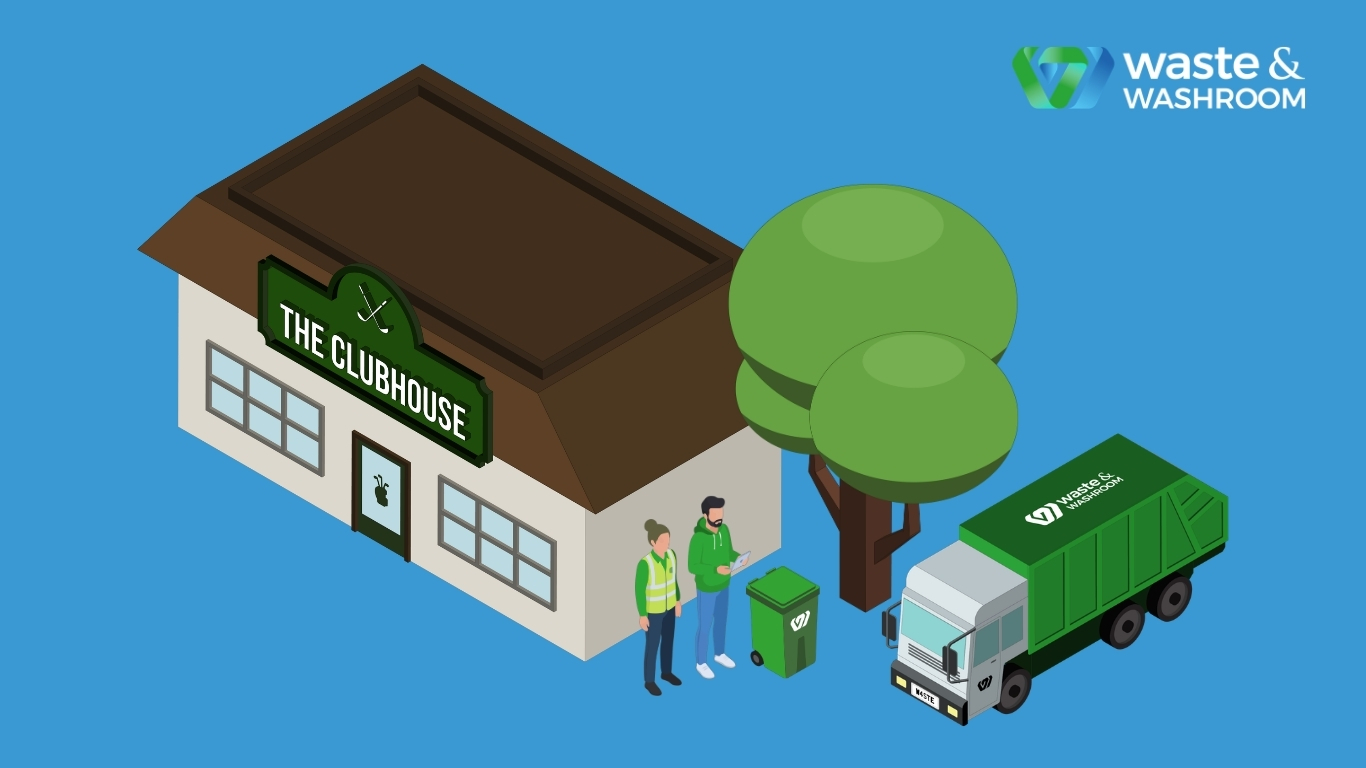
One London golf club reduced waste costs by more than 40% after introducing dedicated food waste and recycling streams, while also increasing weekly waste capacity and improving overall compliance.
Common Business Waste Mistakes
Some of the most common mistakes small businesses make include:
- Assuming business recycling works like household recycling
- Not separating food waste correctly (general waste collections cost 50% more on average)
- Using oversized bins
- Putting black bags into recycling bins (this contaminates the entire collections)
- Ignoring overweight charges
- Failing to review contracts regularly
- Underestimating staff food waste
- Poor signage and staff education
- Assuming legislation does not apply to smaller businesses
- Leaving bins accessible to the public or neighbouring businesses (leading to contamination, overflow and unexpected charges)
Many of these problems are relatively easy to fix once businesses understand how commercial waste collection actually works.
How much does business waste collection cost in the UK?
Business waste pricing depends on the waste type, bin size, collection frequency, location and the provider’s pricing model.
This is one area where businesses often struggle because many providers do not publish real pricing online. In practice, two businesses with very similar setups can end up paying very different amounts.
The bigger issue is often not the headline collection price itself, but the hidden costs businesses do not realise they are paying.
These can include:
- Overweight charges
- Contamination charges
- Oversized bins
- Excess collection frequencies
- Outdated servicing schedules
- Automatic contract renewals
Overweight charges are one of the most common examples. In many cases, providers charge around 20–25p per kilo once bins exceed agreed weight limits. Businesses mixing food waste, glass and general waste together can easily lose hundreds of pounds each year through excess weight charges alone.
In some cases, businesses can lose £400–£500 per year simply through overweight bins and inefficient waste separation.
This is where Waste & Washroom can make an immediate difference. We compare business waste collection prices across a network of national and local providers. Because we are not tied to a single supplier, we can remain independent and find the most suitable option for your business.
In many cases, we can even keep your existing provider in place and simply move your account onto improved negotiated pricing. That means an immediate saving without changing collection days, bin sizes or how your site operates.
How to Compare Business Waste Quotes
When comparing business waste quotes, it is important to look beyond the headline monthly figure.
One of the biggest mistakes businesses make is going directly to large suppliers without fully understanding what they actually need. Providers will often recommend servicing based on broad assumptions, which can lead to oversized bins, unnecessary lifts or setups that are not properly aligned with legal obligations.
Speaking to somebody experienced first can help businesses avoid overpaying and ensure their setup meets requirements under Simpler Recycling legislation.
Businesses should compare:
- Bin sizes
- Collection frequency
- Waste streams included
- Contamination policies
- Overweight charges
- Contract length
- Support quality
- Reliability
- Bin rental Charges
- Bin Delivery Charges
- Response times when issues happen
Price matters, but reliability matters just as much.
One of the biggest frustrations businesses face is poor communication when collections are missed or issues arise. Many businesses value having a direct point of contact far more than dealing with different departments or call centres every time something goes wrong.
Which Commercial Waste Provider Is Best for Multi-Site Businesses in the UK?
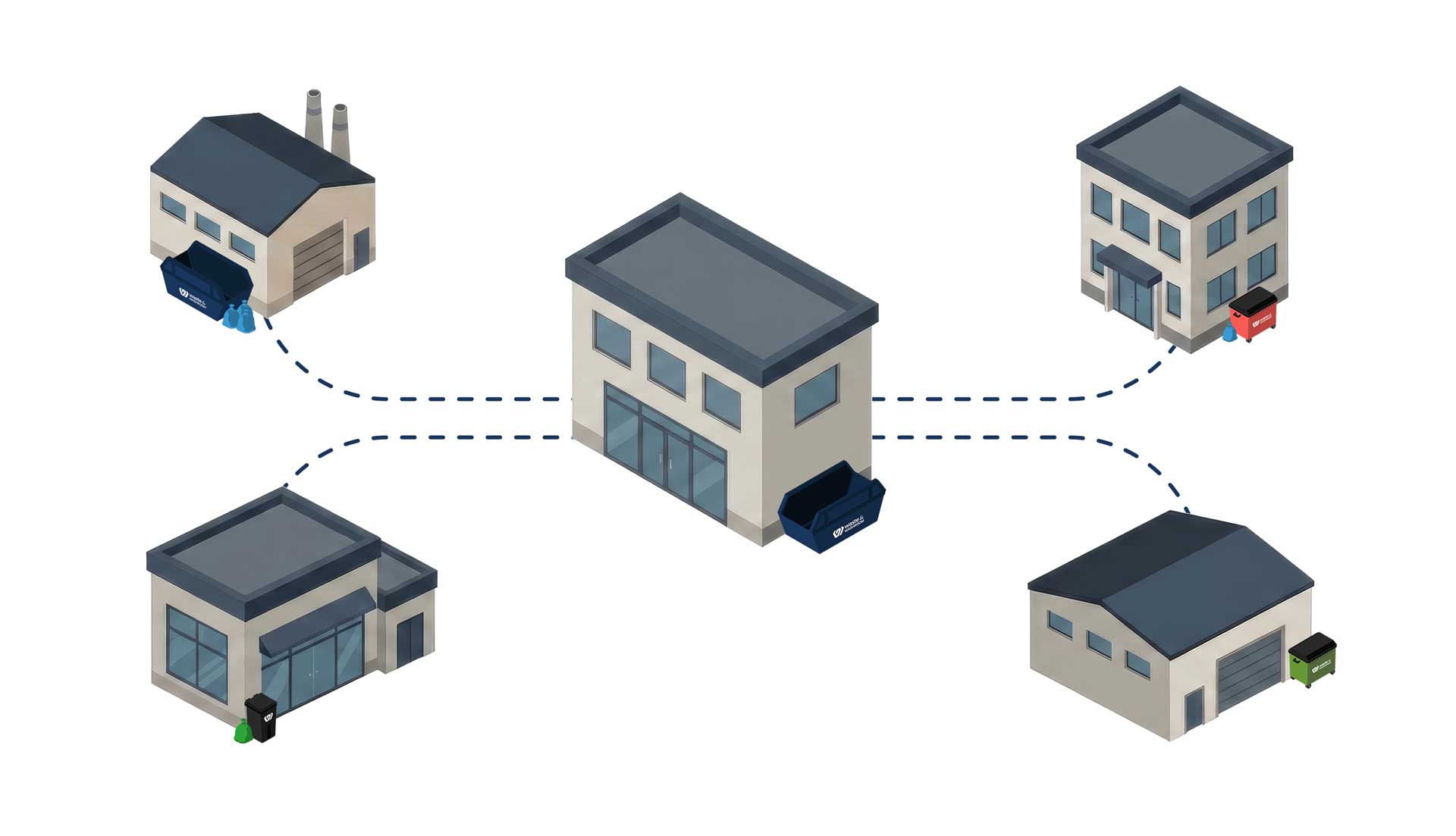
For multi-site businesses, there is rarely one perfect provider everywhere in the country.
Different suppliers perform differently in different regions. In some locations, national providers may offer the strongest coverage. In others, smaller local operators may provide a more reliable service and faster response times.
This is why many multi-site businesses choose to work with brokers rather than managing multiple providers directly.
A broker can compare local and national providers across different regions, identify the most suitable operational fit for each site and simplify management through a single point of contact.
Working with Waste & Washroom means businesses can:
- Use different providers across multiple locations
- Have one account manager
- Receive one consolidated invoice
- Centralise communication and reporting
- Avoid managing multiple supplier relationships internally
For many businesses, operational simplicity becomes just as important as cost savings.
Where do you find the cheapest business waste collection prices?
Most businesses either go directly to a provider or compare the market using a specialist partner.
Going direct can work, but contracts are often fixed-term, renew automatically and rarely get reviewed unless somebody actively challenges pricing. Many businesses stay on the same setup for years simply because “it works”, without realising there may be better pricing or more efficient servicing available elsewhere.
Providers such as Biffa, Veolia and SUEZ operate nationwide, but their best pricing is not always visible to individual businesses.
Working with Waste & Washroom gives businesses access to wider market coverage and buying power. We compare pricing across both national and local providers and can negotiate rates that individual businesses often cannot access directly.
Most importantly, we do not disappear once the contract is signed. We monitor service levels, support businesses with compliance, and if a provider stops performing, we can switch services without disrupting operations.
Managing your waste collection day to day
Waste collection is not “set and forget”. Even with a good provider, things can slip. Missed collections, contamination, inconsistent service, poor communication and paperwork issues are all common.
One of the biggest causes of contamination is businesses assuming commercial recycling works the same way as household recycling.
For example, many households place glass inside mixed recycling bins, while some commercial providers require separate glass collections. Black bags are another common issue. Drivers need visibility into recycling bins, and if black bags are present, loads may automatically be treated as contaminated general waste.
Public-facing bins create further challenges because customers often dispose of waste incorrectly. Clear signage and labelled bins can make a significant difference, particularly in busy venues, sports clubs, cafés and hospitality spaces.
Staff education also plays a major role. Temporary staff and new starters are often the biggest source of contamination problems because they may not fully understand waste separation requirements.
Contamination is another major issue. One of the biggest causes is black bags placed inside recycling bins. Drivers need a clear line of sight into recycling containers. If they see black bags, they often assume the load contains general waste, which can result in contamination charges and recycling being charged at general waste rates.
This is where having Waste & Washroom as the point of contact changes the experience. Instead of sitting on hold with a call centre, businesses have one account manager who understands their setup and resolves issues quickly. It is a more reliable way to manage a service your business depends on every day.
Final thoughts
Small business waste collection does not need to be expensive or difficult, but it does need to be set up correctly.
As Simpler Recycling continues rolling out across the UK, more businesses are reviewing their waste setup, improving food waste separation and looking more closely at compliance requirements.
If you are unsure whether you are paying a fair price, if your service is unreliable, or if compliance has become a headache, it is worth reviewing your current setup properly.
If you want a second opinion, Waste & Washroom can compare your current service against the market and show you what better pricing and smoother collections could look like. No pressure, no disruption, just clear options and practical support.